The Evolution of Reference Gathering: Streamlining the Journey from Concept to Skin
• by DND Applications • 3 min read

For decades, the initial phase of any custom tattoo appointment has remained largely unchanged. A client walks in with a vague collection of thoughts, feelings, and perhaps a few disparate screenshots on their phone. They want a design that captures a specific emotion or narrative, yet they lack the vocabulary to describe it visually. For the tattoo artist, the challenge is not the needle work itself but the act of translation. You become an interpreter, tasked with decoding abstract requests into concrete imagery before a single line of ink touches skin.
Overcoming reference fatigue
The traditional method of gathering references is often the most exhausting part of the creative process. Artists frequently find themselves scrolling through search engines for hours or flipping through physical flash books, trying to find an image that is eighty percent correct so they can draw the remaining twenty percent. This phenomenon, often called reference fatigue, drains creative energy that should be reserved for the actual tattooing session.
Modern technology has begun to shift this dynamic. The emergence of AI tattoo tools offers a new way to brainstorm. Instead of hunting for existing images that do not quite fit, artists can now synthesize new visuals that match the specific composition required for the body's flow. Using a tattoo design generator does not replace the artist's hand. Rather, it serves as a digital sketchbook that operates at the speed of thought. It allows for rapid iteration, helping the client visualize complex ideas like "neo-traditional cybernetic wolves" in seconds rather than days.
The precision of transfer
Once the design concept is solidified, the technical hurdle of translation remains. The bridge between a digital concept and a physical application is the tattoo stencil. A beautiful drawing is useless if it does not transfer cleanly to the skin. In the past, creating a stencil from a realistic reference or a complex composite involved hours of manual tracing or dealing with thermal printers that crush fine details into black blobs.
This is where the quality of your toolkit matters. A robust tattoo stencil app understands the difference between shadow and line. It recognizes that a tattoo AI generated image needs to be broken down into mappable zones for the artist to follow. The goal is to retain the integrity of the design without creating a stencil that is too dark to work from or too faint to survive the wipe.
Quality over novelty
There is a saturation of digital tools in the current market. Many aspiring artists search for a tattoo generator free of cost, hoping to shortcut the design process. However, professional tattooing demands professional reliability. Free tools often lack the high-resolution output required for large scale pieces or back panels. An AI tattoo generator intended for professional use must prioritize resolution, style consistency, and anatomical awareness over simple novelty.
Stencify: The professional standard
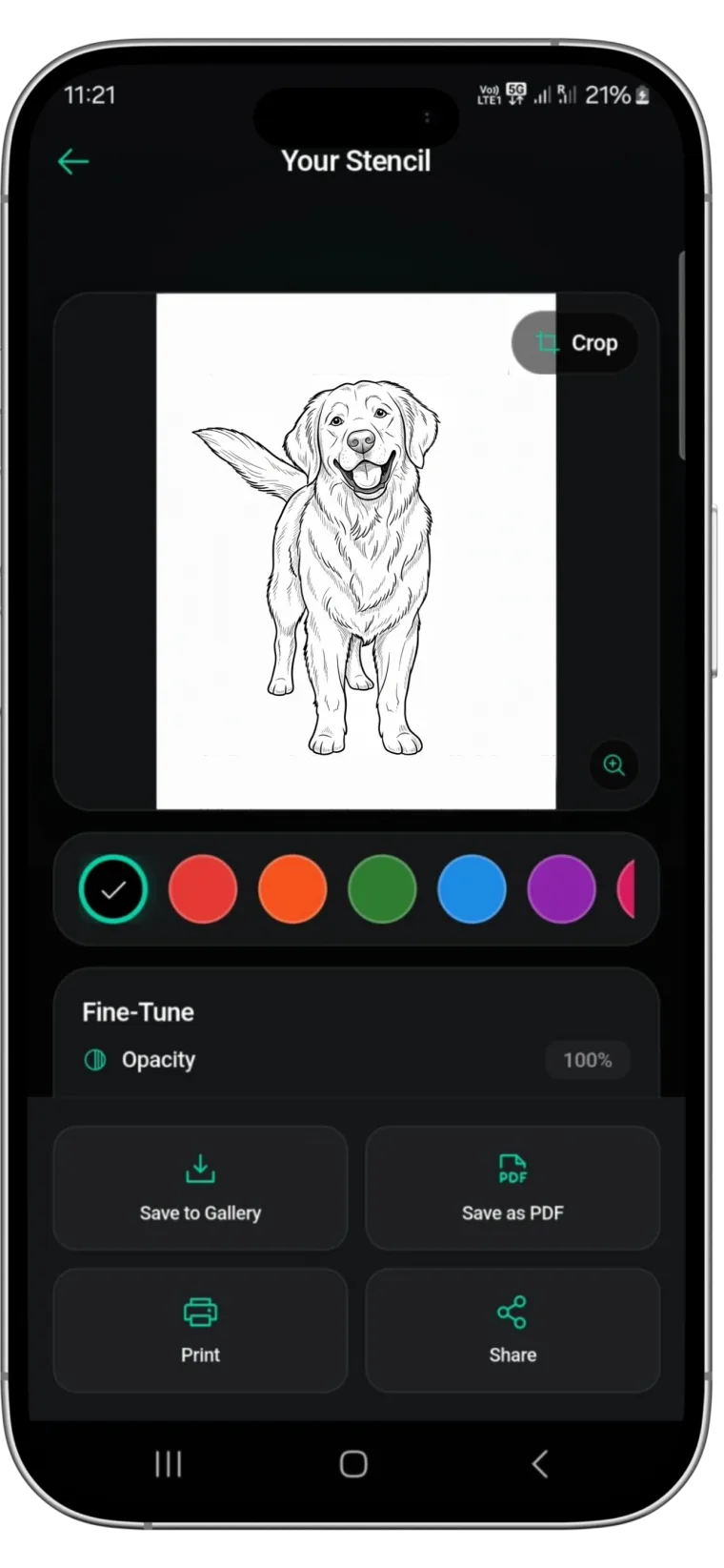
For artists seeking to elevate their consultation and preparation workflow, Stencify offers a distinct advantage. It is not merely a toy for generating images but a comprehensive suite designed for the serious tattooist. Stencify bridges the gap between ideation and application, functioning as both a premier AI tattoo generator and a precision stencil maker. It allows you to generate unique, style-specific references and instantly convert them into detailed, transfer-ready stencils without the noise or blur found in lesser tools.
By integrating Stencify into your workflow, you reclaim the hours lost to reference hunting and manual tracing, allowing you to focus entirely on your art. Transform your consultation process and ensure every design is stencil-perfect.
Related reading
- The Burden of Interpretation - turn scattered references into ready stencils
- Beyond the Trace - master reference preparation for perfect stencils
- How to Streamline Tattoo Consultations - a practical workflow guide
From concept to stencil-perfect
Generate style-specific references and convert them into detailed, transfer-ready stencils instantly. Reclaim your creative energy and focus on what matters, your art.