Fine Line to Bold Traditional: Adapting Your Stencil Technique by Style
• by DND Applications • 7 min read
A stencil that works perfectly for a bold American traditional piece would be a disaster for a delicate fine line tattoo. Every tattoo style has its own visual language, and the tattoo stencil must speak that language fluently. Line weight, detail density, spacing, and the balance between positive and negative space all shift depending on the style you are executing. Artists who treat stencil preparation as a one-size-fits-all process are limiting their ability to excel across different genres. Understanding how to adapt your stencil approach to each style is one of the marks of a versatile professional.
Fine Line: Precision Above All
Fine line tattooing demands the most from a stencil. Every line in the transfer guide must be thin, clean, and precisely placed because there is no room for correction once the needle starts. A stencil tattoo guide for fine line work should minimize detail clutter and maximize clarity. The temptation is to include every subtle detail from the reference, but overcrowding a fine line stencil creates confusion during application. The key is selective reduction: include only the lines that will actually be tattooed and eliminate anything that is decorative noise in the reference but not essential to the final piece. Spacing between lines becomes critical because fine line work lives or dies by its negative space.
Bold Traditional: Structure and Confidence
Traditional American tattooing is built on thick outlines, solid fills, and limited color palettes. The stencil for traditional work needs to emphasize bold boundary lines and clearly defined shapes. Unlike fine line stencils, traditional stencils benefit from heavier line weights that mirror the actual needle groupings the artist will use. The picture to stencil conversion for traditional work should prioritize strong outlines over internal detail. Traditional tattoos age well precisely because their structure is bold and simple. The stencil should reflect that philosophy: clear shapes, confident borders, and obvious fill zones that tell the artist exactly where each element begins and ends.
Black and Grey Realism: Mapping Tones
Realism stencils are unique because the finished tattoo relies more on tonal gradation than on line work. A realism stencil does not need every shadow mapped out in lines, but it does need key structural landmarks that guide the artist through the piece. The most effective approach is to create a stencil that marks the boundaries of major tonal zones, the placement of highlights, and the anchoring points of the composition. Converting a photographic reference through an image to stencil workflow for realism requires careful threshold adjustment. Too much detail and the stencil becomes an unreadable mess of lines. Too little and the artist has no reference points for building the tonal values freehand.
Neo-Traditional and Illustrative
Neo-traditional work blends the bold outlines of traditional tattooing with more complex shading, color palettes, and illustrative detail. The stencil for this style needs to carry more internal information than a traditional stencil while maintaining the strong outline structure. This is where line weight hierarchy becomes essential. The outer boundaries should be the heaviest lines in the stencil, internal structural lines should be medium weight, and decorative or textural details should be the lightest. This hierarchy gives the artist a clear visual roadmap during the tattoo without creating a flat, undifferentiated transfer.
Geometric and Blackwork: Mathematical Precision
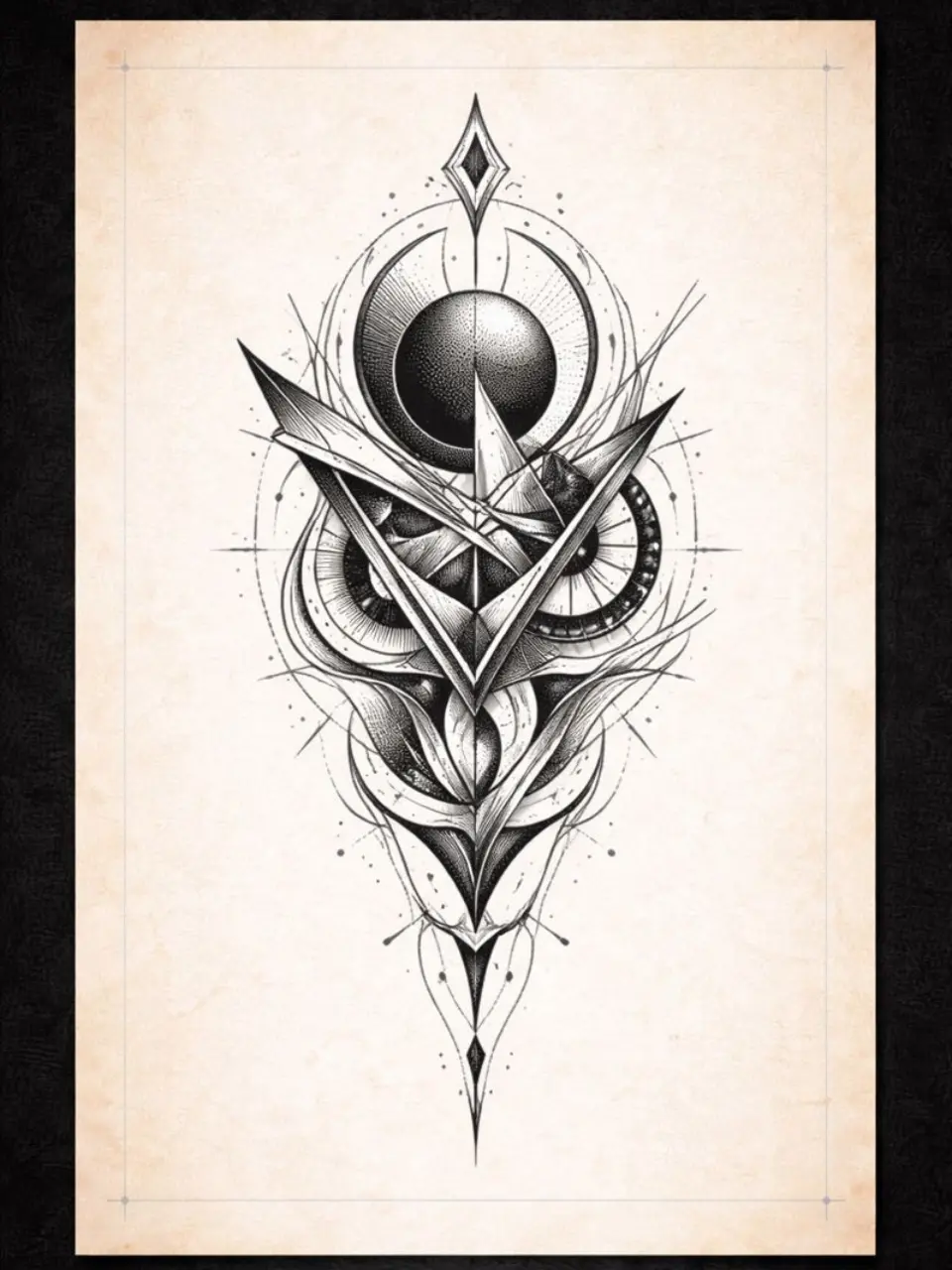
Geometric tattoos and blackwork patterns leave no room for approximation. A line that is slightly off-center or a shape that is not quite symmetrical will be visible for the life of the tattoo. Stencils for geometric work require absolute precision in spacing, alignment, and proportion. When converting references using a tattoo stencil maker approach, the output needs to preserve the mathematical relationships between elements. Dotwork within geometric pieces adds another layer of complexity, as the stencil needs to indicate dot placement density without becoming so crowded that individual placement points are lost.
Adapting With Stencify
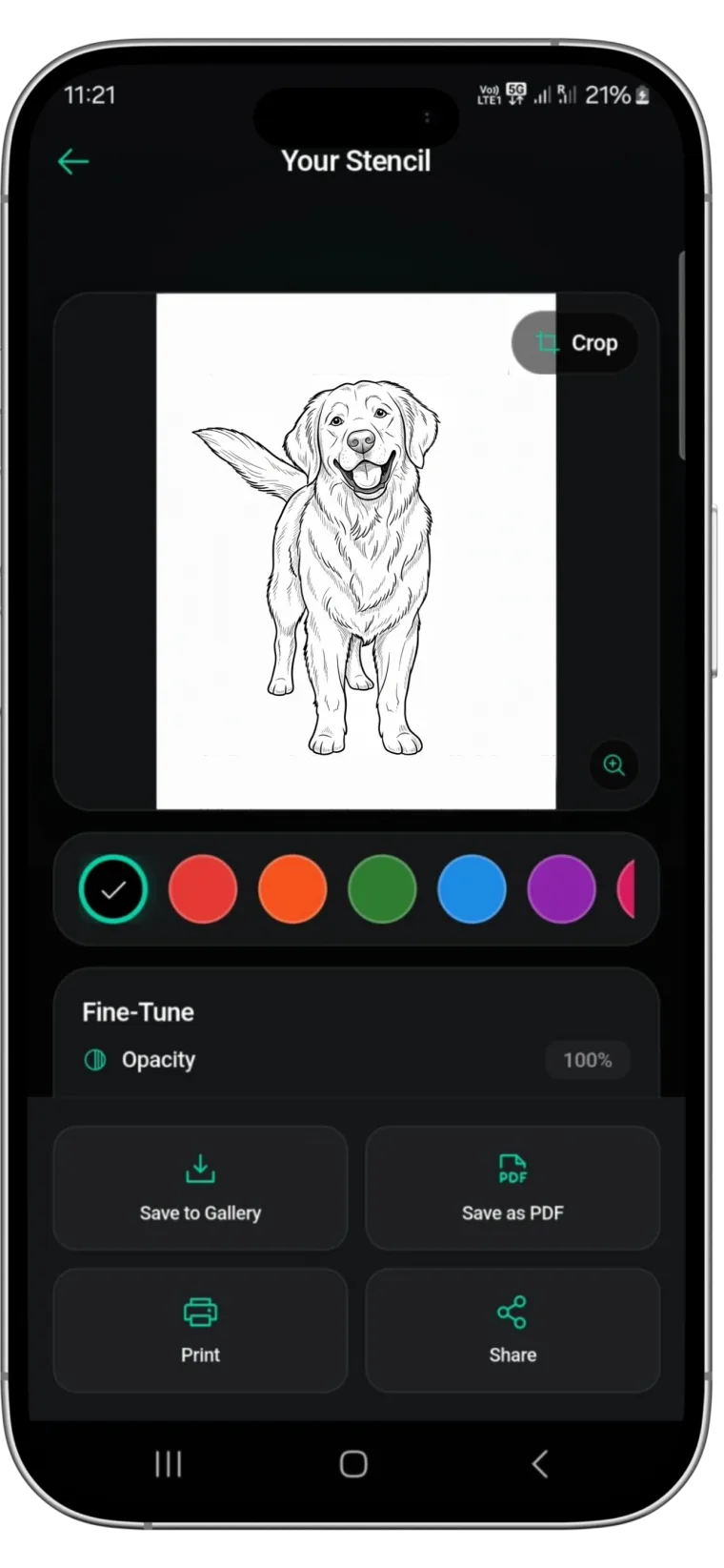
Stencify is designed to handle the full spectrum of tattoo styles. This tattoo stencil app lets you adjust detail levels and contrast thresholds to produce stencils tailored to your specific style. Need a clean, sparse guide for fine line work? Reduce the detail density. Working on a traditional piece that needs bold, confident outlines? Increase the line weight emphasis. The ability to convert image to tattoo stencil formats with style-specific adjustments means you spend less time fighting your tools and more time executing your art.
Ready to match your stencil to your style? Get Stencify on the App Store and produce the right stencil for every piece.
Related reading
- Tattoo Placement and Body Flow - why your stencil must respect anatomy
- The Technical Artist's Guide - contrast and detail in stencil preparation
- Precision in Every Line - the science of high-contrast tattoo stencils
One app, every style
Stencify adapts to your style with adjustable detail levels and contrast controls. From fine line to bold traditional, get the right stencil every time.