Tattoo Placement and Body Flow: Why Your Stencil Must Respect Anatomy
• by DND Applications • 7 min read
A design that looks perfect on a screen can fall apart on skin. The human body is not a flat canvas. It curves, stretches, compresses, and moves. A tattoo stencil that ignores these realities will produce a tattoo that looks distorted from certain angles, bunches awkwardly when muscles flex, or loses its visual impact because the composition fights the natural lines of the body. Understanding anatomy is not optional for professional tattoo artists. It is the difference between a tattoo that enhances the body and one that merely sits on it.
The Flat Design Problem
Most reference images and digital designs are created on flat surfaces. When an artist develops a stencil tattoo guide from a flat reference without considering the destination body part, the transfer will inevitably need adjustments. A symmetrical mandala designed on a flat screen becomes asymmetrical when applied to a shoulder cap because the deltoid muscle creates a curved surface that stretches the outer edges. A script piece designed in a straight line warps when placed along the curve of a rib cage. These distortions are predictable and preventable, but only if the artist considers anatomy during the stencil preparation phase rather than discovering the problem during application.
Key Anatomical Landmarks
Experienced tattoo artists develop an intuitive understanding of how specific body areas behave. The inner bicep stretches significantly when the arm extends. The ribs create ridges that interrupt smooth line work. The spine provides a natural center line that compositions can anchor to or flow away from. The collarbone creates a natural frame for chest pieces. Knee and elbow joints present some of the most challenging surfaces because skin bunches when the joint bends and stretches when it extends. Knowing these landmarks allows you to design stencils that account for movement and position, producing tattoos that look intentional in every pose rather than correct in only one.
Flow and Composition on Curved Surfaces
The best tattoos work with the body rather than against it. Japanese traditional tattooing understood this centuries ago, designing compositions where dragons follow the curve of the arm and waves wrap naturally around the torso. This principle applies to every style. When preparing a picture to stencil conversion for a body placement, consider how the design's directional flow interacts with the body's natural lines. A design that flows downward on the outer forearm follows gravity and the natural taper of the arm, creating visual harmony. The same design placed against the body's natural lines can feel static or fighting for attention. The stencil is where these decisions get locked in.
Common Placement Mistakes
Several placement errors recur in studios, and almost all of them can be traced back to stencil preparation. Placing a design too close to a joint means the tattoo will distort during movement. Centering a design on a muscle belly without accounting for how that muscle looks when flexed versus relaxed creates a tattoo that only looks right in one state. Ignoring the way skin folds and creases at the armpit, behind the knee, or at the wrist leads to designs that crumple in natural resting positions. Another common mistake is sizing a design on screen without printing and testing it on the actual body part first. What looks like the right proportion on a tablet can feel too small or too large once placed on skin, and the stencil application is the last chance to catch these errors.
Testing Placement Before Committing
The stencil application is not just a transfer step. It is a final design review. Professional artists use this moment to check proportions, adjust positioning, and verify that the composition works with the client's specific anatomy. Every body is different. Two clients wanting the same forearm piece may need different stencil sizes and placements based on their arm length, muscle mass, and skin elasticity. Using a reliable image to stencil workflow that allows for quick resizing and reprinting makes this adjustment process efficient rather than frustrating. The ability to test multiple placements without redrawing from scratch is what separates a smooth session from a stressful one.
How Stencify Supports Placement Precision
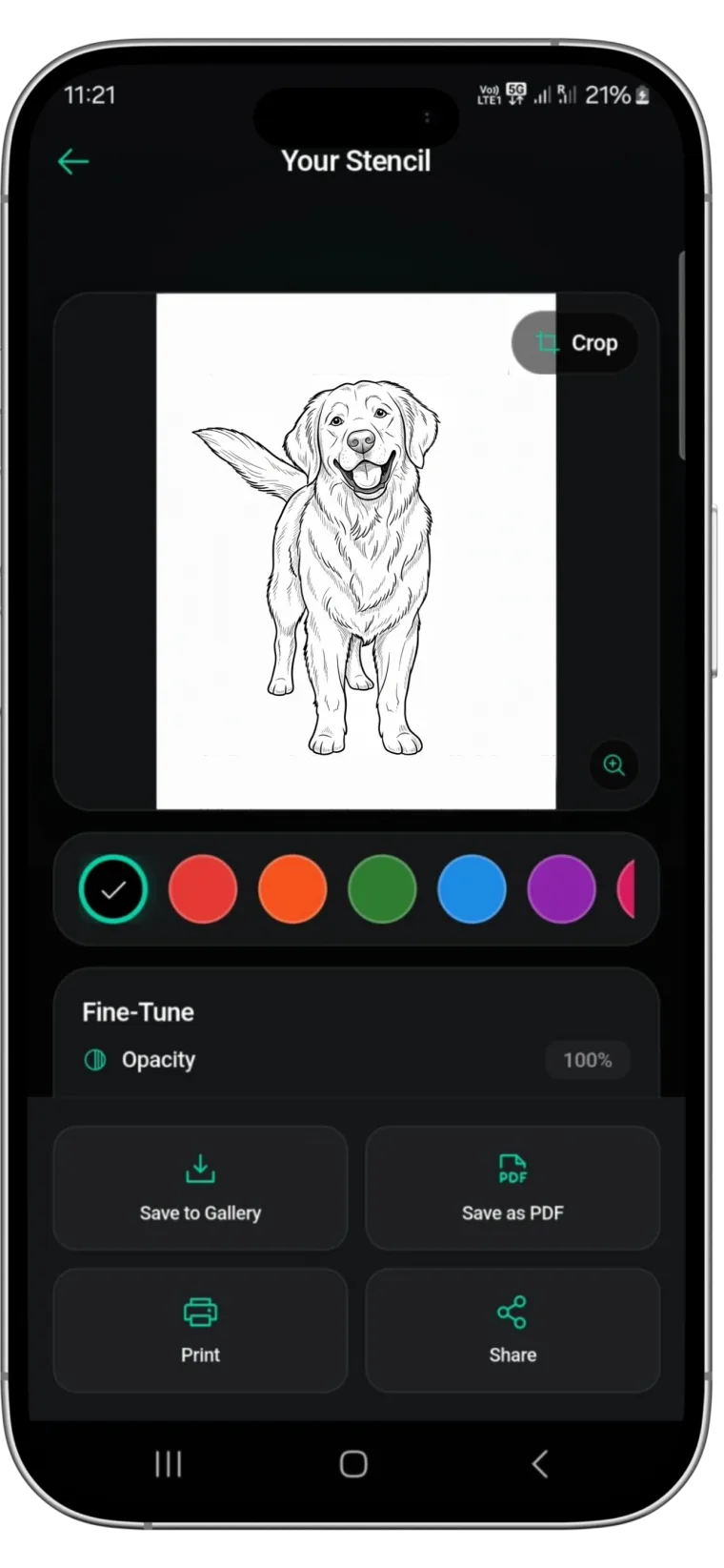
Stencify gives artists the flexibility to generate and adjust stencils quickly, making the placement process more exploratory and less stressful. This tattoo stencil app allows you to scale designs, adjust detail density, and produce multiple versions for testing on the body. When a placement does not feel right, you can regenerate and reprint without losing the creative momentum of the session. By reducing the friction in the stencil preparation phase, Stencify frees artists to focus on what matters most: finding the placement that makes the design and the body work together.
Ready to place every tattoo with precision? Get Stencify on the App Store and start working with the body, not against it.
Related reading
- Fine Line to Bold Traditional - adapting your stencil technique by style
- The Architecture of Clarity - why stencil precision dictates tattoo longevity
- Mastering Contrast and Flow - the architecture of a flawless tattoo stencil
Placement that respects the body
Stencify lets you quickly generate, scale, and adjust stencils for precise placement. Test multiple options and find the perfect fit for every client.