How to Make a Tattoo Stencil Without Transfer Paper
• by DND Applications • 6 min read
Sometimes you have a design and no transfer paper: a client wants to see a placement tonight, you are testing an idea on yourself, or the supply order has not arrived. There are three ways to get a design onto skin without stencil paper, and all three work for a preview. None of them is a substitute for a proper transfer when the needle comes out, and this guide says why at each step. For the real thing, read how to use tattoo transfer paper.
Key takeaways
- The deodorant trick, pen transfer and skin markers all put a design on skin without transfer paper. All three are for checking size and placement only.
- Start from clean line work either way. A muddy design is muddy on skin no matter how you move it there.
- Print at actual size on plain paper first; every method below starts from a correctly sized printout.
- For a session, use thermal or hectograph transfer paper and stencil solution. Improvised transfers smear, fade and shift under a glove.
First, make the line work
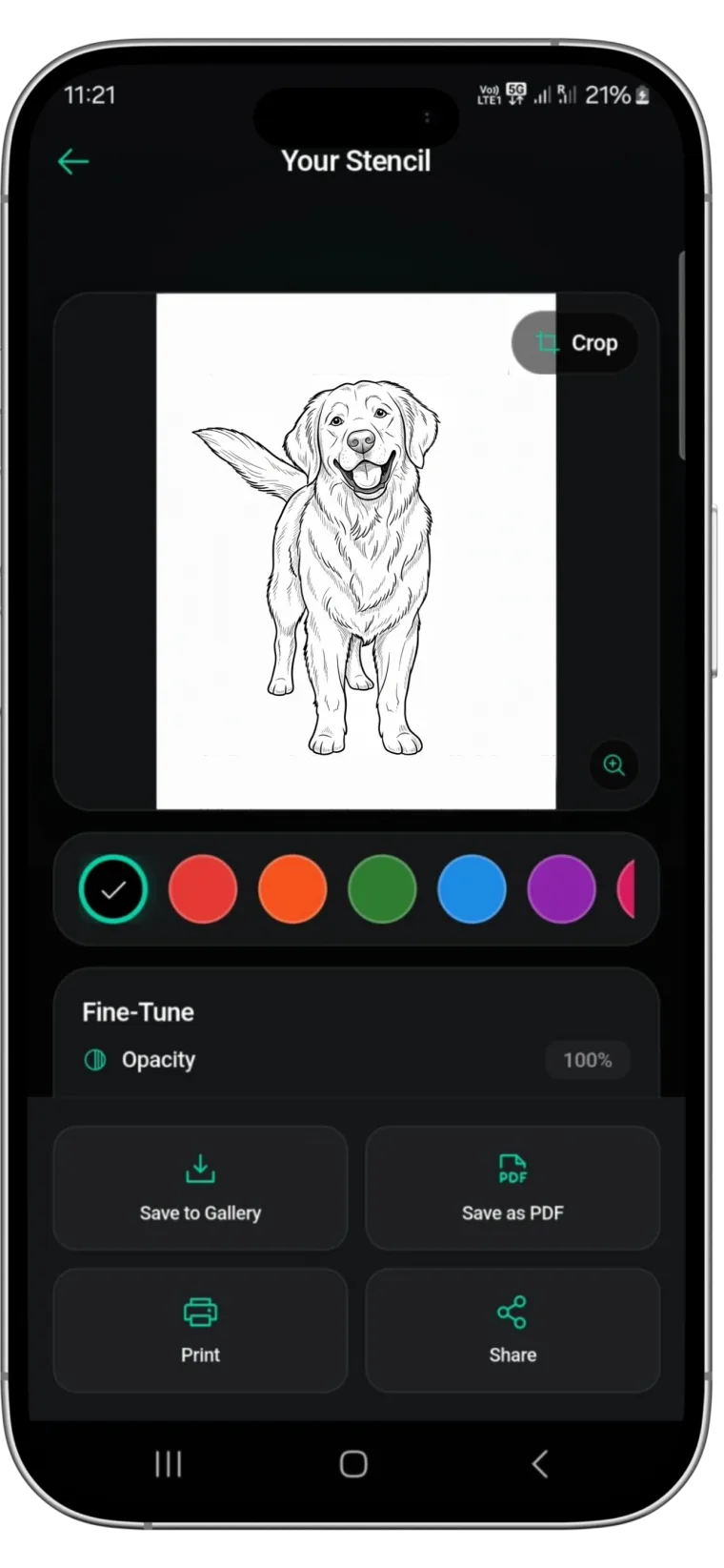
Whatever method you use, the design has to be clean line work at the right size before it touches skin. Convert the reference into lines, drop the shading, and print it at 100% on plain paper. Stencify does the conversion from a photo or sketch in about 30 seconds and exports a PDF at actual size; our sizing guide covers getting the printout to the right dimensions. With a correct plain-paper print in hand, pick a method.
Method 1: The deodorant trick
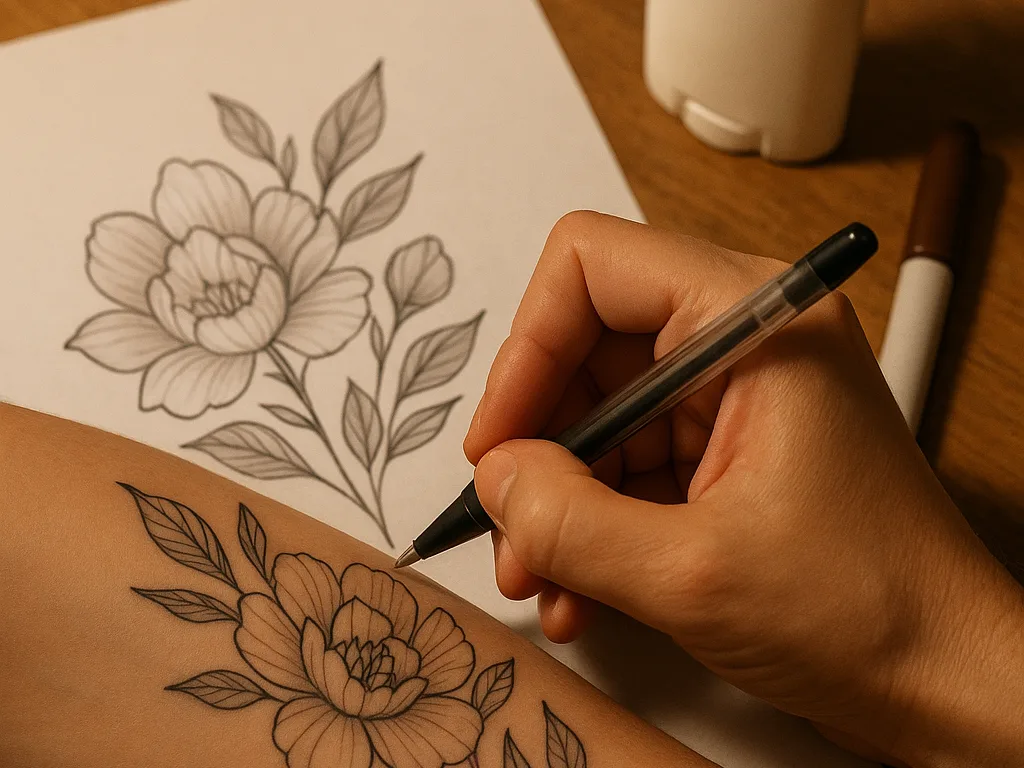
Trace the printed design with a soft pencil or a ballpoint pen, pressing hard so there is plenty of graphite or ink on the paper. Rub a thin layer of solid stick deodorant over the skin where the design goes; the slightly tacky surface is what picks up the pigment. Press the drawn side of the paper onto the skin, hold it still for twenty to thirty seconds, and peel. You get a faint, reversed copy of your trace.
It is faint by design, which is exactly why it suits a preview and not a session. The lines wipe off with a thumb, they do not survive stencil solution or a wet wipe, and the deodorant leaves a film under the skin that a needle should not go through. Remember to mirror the design before tracing if direction matters, such as lettering.
Method 2: Pen transfer with hectograph paper
Hectograph paper, also called freehand or carbon transfer paper, is technically a transfer paper but needs no printer, which is why it belongs here. Lay the plain-paper print over a hectograph sheet and trace the lines firmly with a ballpoint pen. The pressure moves the purple carbon onto the backing sheet, which you then apply to skin with stencil solution exactly like a thermal stencil. This is the one method on this page that is session-grade, because it uses real transfer carbon and real stencil solution. It costs about ten extra minutes of tracing. The full method is in how to make a tattoo stencil.
Method 3: Skin markers and freehand
Skin-safe surgical markers come in fine tips and are the right tool for drawing directly on the body: guide marks, centre lines, or the whole design for simple bold work. Use the plain-paper printout as your reference, mark a few proportion points with the tape measure, and draw. Freehand suits lettering, geometric shapes and bold traditional outlines. It does not suit portraits, fine line or anything where a millimetre matters, because a marker line is thicker than a stencil line and you cannot undo it without alcohol and a restart.
Why previews only, and what to use for the session
Deodorant and marker transfers share the same weakness: the lines sit on the skin surface and move. A gloved hand, a wipe of green soap or thirty minutes of work will smear or lift them, and a smeared line mid-session is how tattoos go crooked. Transfer paper with stencil solution bonds the carbon to the skin so it survives the whole appointment. Use the methods above to confirm size and placement with the client, then make the real transfer with thermal paper from a stencil printer or hectograph paper traced by hand.
Preview on screen first
The fastest preview of all skips the skin entirely. Stencify shows the stencil on a body model or on a photo of your client at the measured size, so most placement questions are settled before you reach for deodorant or markers. When you are ready, it exports the stencil sized for transfer paper. iPhone, iPad and Android, two free uses to start: get Stencify on the App Store or on Google Play.
Frequently asked questions
Can you make a tattoo stencil without transfer paper?
For a preview, yes: the deodorant trick, a skin marker, or tracing onto hectograph paper by hand. For the actual tattoo, use transfer paper with stencil solution so the lines survive the session.
How does the deodorant tattoo stencil trick work?
Solid stick deodorant leaves a tacky film on the skin. Press a pencil or ballpoint tracing against it and some pigment transfers as a faint, mirrored copy. It wipes off easily, so it is only for checking placement.
Is hectograph paper the same as transfer paper?
It is a type of transfer paper that you trace onto by hand with a pen instead of printing on with a thermal printer. The result transfers to skin with stencil solution like any other stencil.
What pen can I use to draw a tattoo stencil on skin?
A skin-safe surgical marker. Ordinary pens and markers are not made for skin and should not be used where a needle will go.
Related reading
- How to Use Tattoo Transfer Paper - the session-grade transfer
- How to Make a Tattoo Stencil - three methods including the hand-traced one
- Tattoo Stencil Paper Guide - thermal and hectograph paper explained
- Stick and Poke Stencils - the home-tattoo version of this problem
Get the design right before you worry about paper
Stencify makes the clean line work and previews it on skin. When you are ready for the real transfer, it prints at actual size.