Tattoo Pain Chart: Where It Hurts Most and Least
• by Stencify • 6 min read
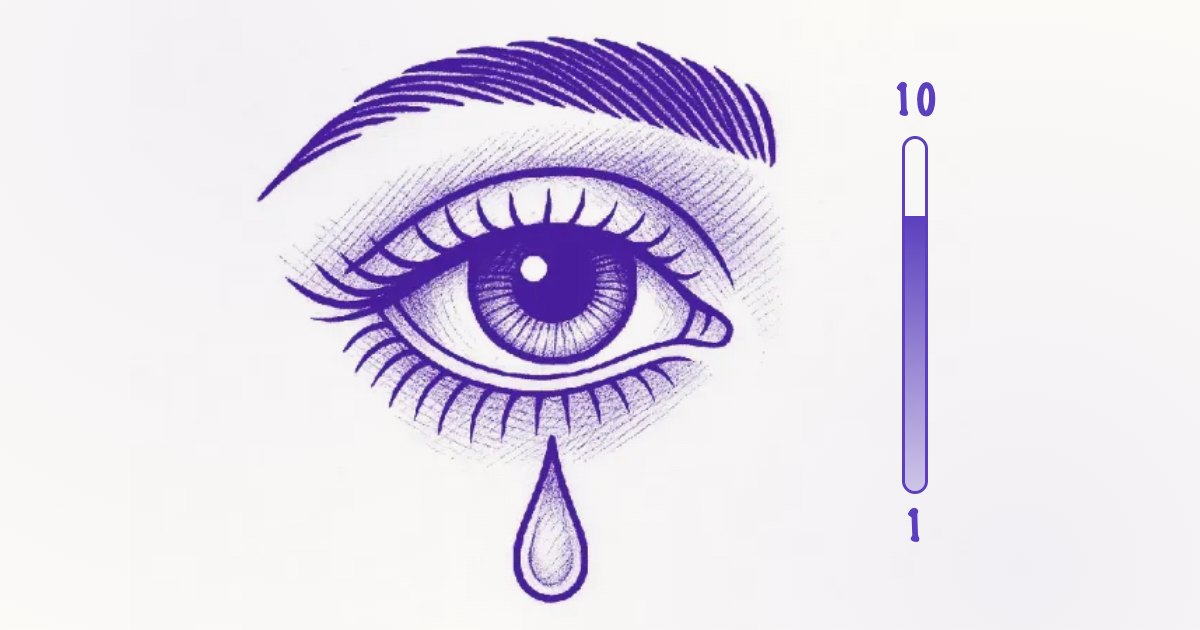
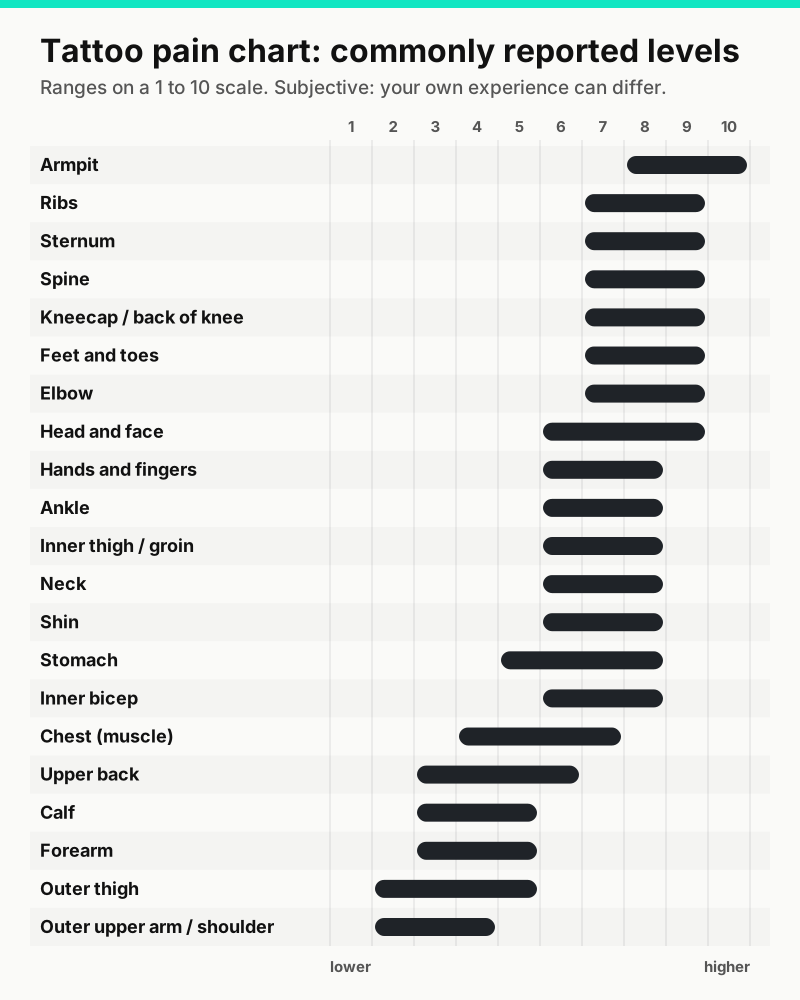
"How much will it hurt?" is one of the first questions clients ask, and the honest answer is that it depends on the person as much as the placement. Still, some areas are reported as painful far more often than others. The chart below sums up those common reports on a 1 to 10 scale, with ranges instead of single numbers, because no two clients describe the same spot the same way.
Key takeaways
- Thin skin over bone and areas with many nerve endings are reported as most painful: armpit, ribs, sternum, spine, knees, elbows, feet.
- Padded areas such as the outer arm, outer thigh, forearm and calf are commonly reported as least painful.
- Pain is subjective. In one large survey, session length and stress before the session mattered more than body area.
- Shorter sessions, rest, food and a calm start make more difference than most people expect.
The tattoo pain chart
Where the numbers come from
There is no clinical measurement of tattoo pain by body part. The ranges above are a summary of what artists and clients commonly report, and they follow the same broad grouping used by health publications such as Healthline's tattoo pain chart: bony, thin-skinned and nerve-dense areas at the top, padded areas at the bottom. Read the ranges as "where most people land", not as a prediction for you.
Research suggests placement may matter less than people think. A 2020 study in the International Journal of Environmental Research and Public Health surveyed 1,092 tattooed people in Poland. In that study, the body area (grouped broadly as upper limb, lower limb, torso and so on) was not a significant predictor of pain during tattooing. Session length and stress before the session were. It is one study with broad categories, but it matches what many artists see: a nervous client on a long session often struggles more than a relaxed client on the ribs.
Most painful areas, and why
- Armpit and inner bicep. Thin, soft skin with many nerve endings and lymph nodes nearby. Often rated near the top.
- Ribs and sternum. Thin skin directly over bone, and the area moves with every breath. Many people say the vibration is the hardest part.
- Spine. Bone close to the surface along the centre line.
- Knees and elbows. Bony on the front, very thin and sensitive behind the knee and in the inner elbow.
- Feet, toes and ankles. Little padding over many small bones and tendons.
- Hands, fingers, head, face and neck. Thin skin, many nerve endings, and for the head and neck, bone close underneath.
- Stomach and inner thigh. These vary a lot. Some people barely notice; others find the soft, stretchy skin very sensitive.
Least painful areas
- Outer upper arm and shoulder. Thick skin over muscle. A common choice for a first tattoo.
- Outer thigh. Plenty of padding and few nerve endings near the surface.
- Forearm. The outer forearm is usually easier than the inner side near the wrist.
- Calf. Muscle padding, though the shin side is more sensitive.
- Upper back. Usually moderate, rising as you get closer to the spine and shoulder blades.
Low on the chart does not mean painless. Even the easiest placement can become hard work after several hours.
What changes pain beyond placement
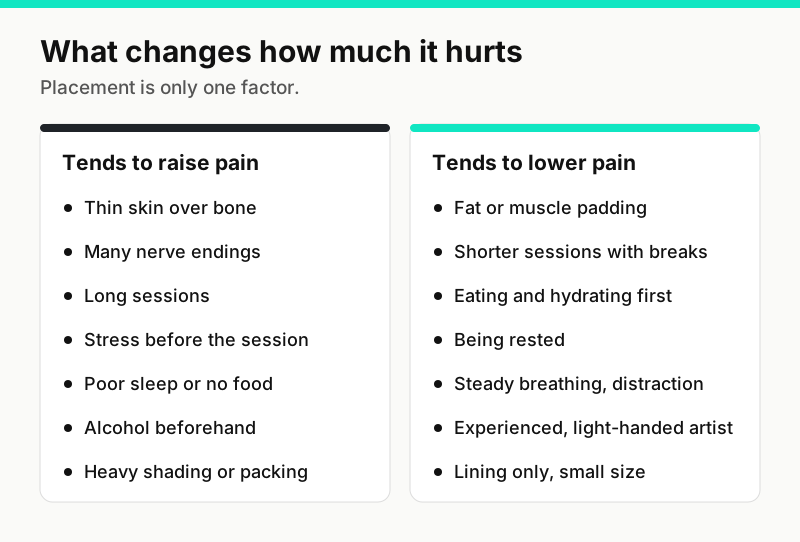
- Session length. Pain tends to build over time. Splitting a large piece into several sessions, or planning breaks, often helps more than choosing a different placement.
- Stress and sleep. Arriving anxious, tired or hungry makes most people more sensitive. Eat a proper meal beforehand and get some sleep the night before.
- Alcohol and medication. Avoid alcohol before a session. Some common painkillers affect bleeding, so ask a pharmacist or doctor before taking anything, rather than self-medicating on the day.
- The work itself. Linework, packed colour and heavy shading feel different. Many clients find going back over already-worked skin harder than the first pass.
- Previous tattoos. Some people find later tattoos easier because they know what to expect. Others do not. Evidence here is limited.
- Numbing products. Some clients use topical numbing creams. Discuss this with the artist first, since some products can affect how the skin takes ink, and follow the product's directions.
What it feels like in different areas
Clients often find it easier to prepare for a sensation than for a number. These descriptions come up again and again, though everyone describes pain differently:
- Over bone (ribs, sternum, spine, ankles): a sharp, rattling vibration that some people feel in their teeth.
- Thin, soft skin (inner arm, armpit, back of the knee): a hot, stinging or burning feeling.
- Padded areas (outer arm, thigh, calf): often described as a scratch or a cat scratch that becomes sore over time.
- Shading over the same area: more of a dull, raw ache than a sharp sting, especially late in a session.
Tips for clients on the day
- Eat a proper meal one or two hours before, and bring a sugary drink or snack for breaks.
- Sleep well the night before and avoid alcohol the day before and on the day.
- Wear clothes that give easy access to the placement so you can sit or lie comfortably.
- Breathe slowly and steadily, especially when the needle starts on a new area.
- Tell the artist when you need a break. A short pause is better than flinching.
- Bring headphones or something to watch if it helps you relax.
Planning around pain, for artists
A pain chart is most useful in the consultation, before anything is booked. If a client wants a large piece on the ribs for their first tattoo, it is worth a frank conversation about splitting it into sessions or starting with the outline only.
- Prepare everything before the client sits down. A sized, checked stencil and a set-up station mean less time in the chair. Reprinting a stencil mid-session adds time when the skin is already sensitive.
- Keep the stencil clean for long sessions. On high-pain areas clients move and flinch more. A stencil that lasts, as covered in how long a tattoo stencil lasts, saves restarts.
- Offer an alternative placement. Sometimes moving a design a few centimetres, from the sternum to the chest muscle or from the inner to the outer forearm, keeps the idea and cuts the pain.
Seeing the design on both spots helps the client decide. Stencify places a stencil on a photo of the client at real size with its try-on feature, so you can compare two placements side by side in a few minutes and export the chosen one as a PNG or PDF. It runs on iPhone, iPad and Android with two free uses: get Stencify on the App Store or on Google Play.
Frequently asked questions
Where is the most painful place to get a tattoo?
The areas most often reported as most painful are the armpit, ribs, sternum, spine, kneecap and the back of the knee, elbows, and the feet. They have thin skin over bone, many nerve endings, or both. Individual experience varies a lot.
Where does a tattoo hurt the least?
The outer upper arm and shoulder, outer thigh, forearm, calf and upper back are commonly reported as the least painful. They have more padding from muscle or fat and fewer nerve endings close to the surface.
Does a tattoo hurt more on bone?
Many people report that it does. Skin over bone has little padding, and the vibration of the machine can be felt more strongly. It is a common pattern, not a rule for everyone.
Does tattoo pain get worse the longer the session lasts?
For many people, yes. In a 2020 survey of 1,092 tattooed people, session length was one of the strongest factors linked to higher reported pain. Breaks and splitting large pieces into several sessions can help.
Related reading
- Tattoo Size Chart - typical sizes by placement
- Tattoo Placement and Anatomy - how placement affects the design
- How Long a Tattoo Stencil Lasts - keeping the stencil through long sessions
- Tattoo Try-On - comparing placements before booking
Plan the placement before the session
Stencify shows a stencil on a photo of the client at real size, so you can compare placements before anyone sits in the chair.