Stencil library
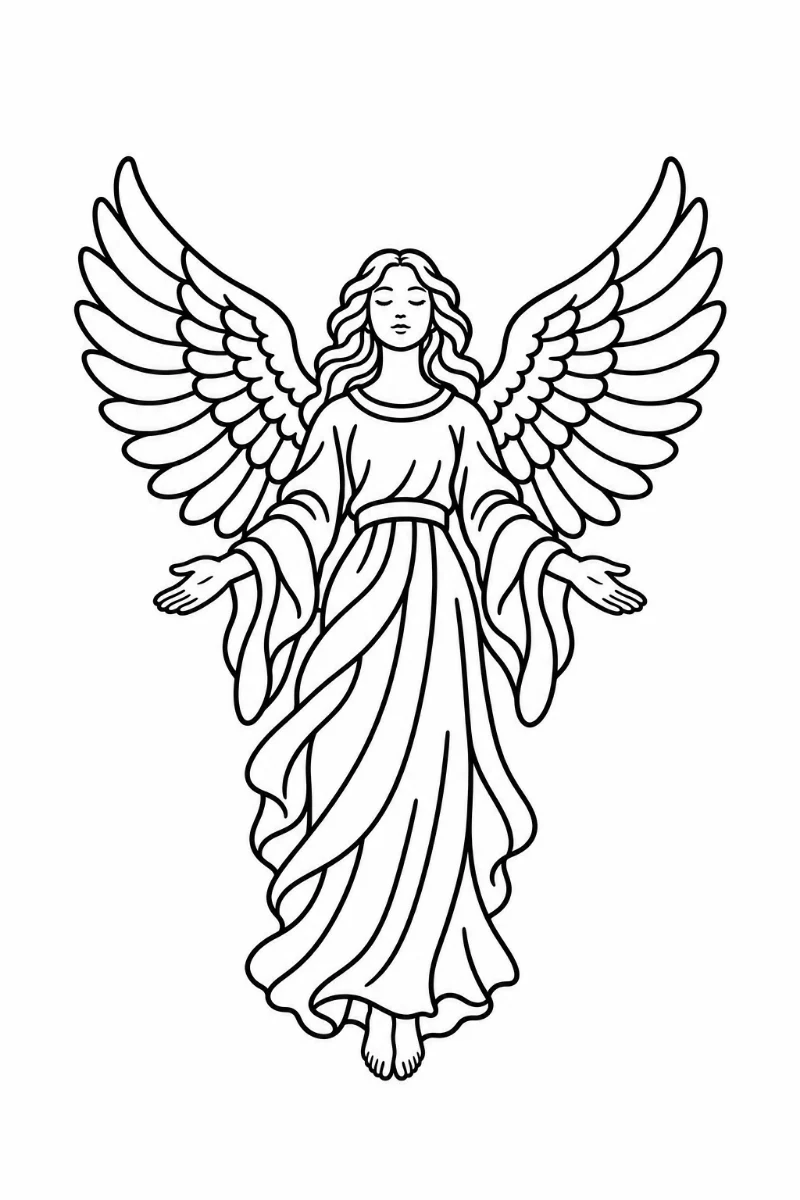
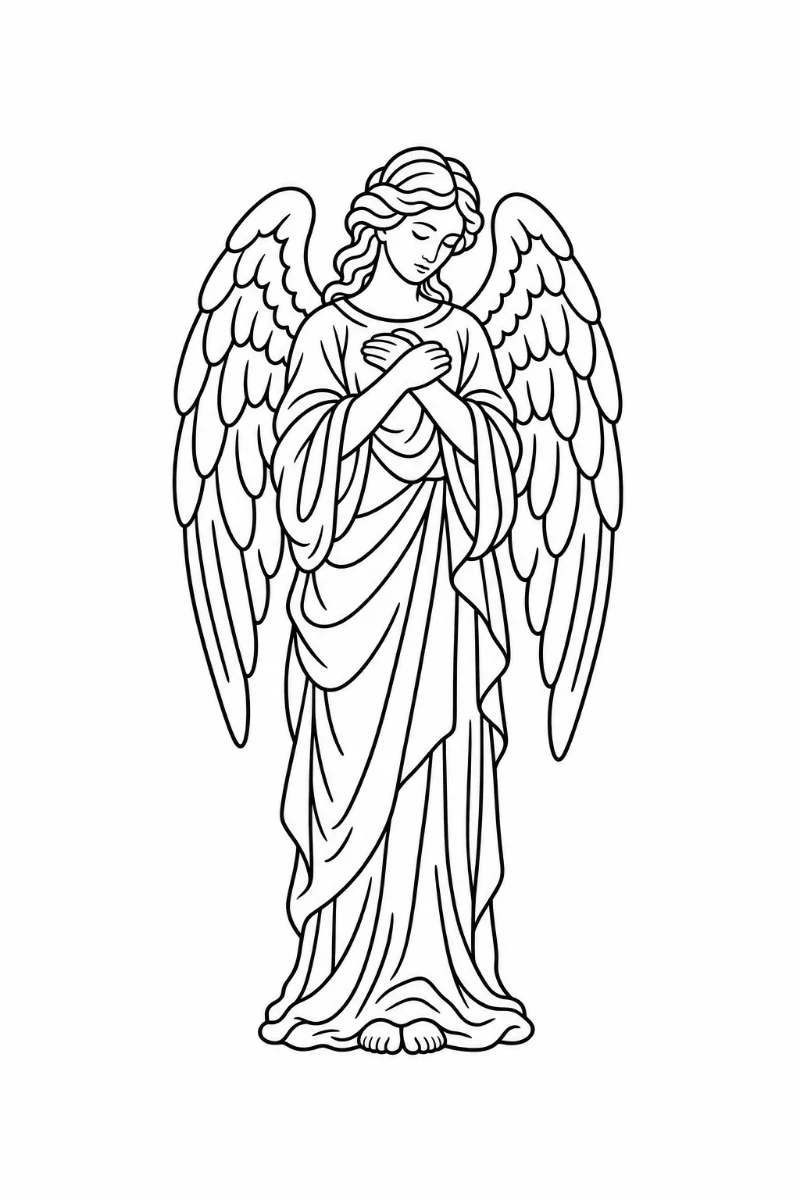
Angel tattoo stencil
An angel stencil is usually two stencils in one: a figure, often a face or a full portrait, and a pair of wings with dozens of overlapping feathers. The face wants fine, sparse lines; the wings want structure. When both come out at the same weight, the face gets lost behind the feathers. The work is in giving each part its own weight while keeping it one piece.
- Free stencils to print
- Line work for thermal or hand transfer
- Prints on A4 or US Letter
What an angel tattoo means
Angels are read as protection, guidance and faith, and the guardian angel is one of the most common memorial tattoos, sometimes with the face of the person being remembered.
Specific figures carry specific meanings. A Renaissance cherub tends to mean innocence or love, a weeping cemetery angel reads as grief, and a fallen angel flips the theme toward rebellion. Ask who or what the angel is for, because it changes the expression on the face.
Popular styles and how the stencil changes
Black and grey realism
The most common approach, often taken from photographs of cemetery statues or Renaissance paintings. The stencil marks the features, the hairline and the main feather rows.
Fine line
A small angel or only the wings, one weight, no shading. Wings drawn as a few clean rows rather than individual feathers.
Traditional
Simplified wings in three or four feather rows and a bold outline around the figure.
Statue and stone
Statues photograph with strong, useful shadows. Mark cracks and weathering only if the client wants the stone to look aged.
Placement and size
- Upper back, with the wings spanning the shoulder blades, is the classic large placement.
- Forearm and calf pieces at five to eight inches suit a standing angel or a portrait with partial wings.
- Chest and sleeves often combine an angel with clouds, light rays or a rosary.
- Small wings on the back of the neck or behind the ear work best as outlines with two or three feather rows.
Line weight tips for an angel stencil
- Give the wing outline and the long flight feathers the heaviest weight, inner feathers a step lighter, and the face the lightest lines on the stencil.
- On the face, keep the eyes, nose, mouth and jaw, and reduce the hair to a few flowing shapes instead of individual strands.
- Statue photos convert with stone texture. Raise contrast until the surface grain is gone and only the form edges remain.
- Draw wings as rows. Overlap edges should alternate cleanly so each feather clearly sits on top of the next.
Frequently asked questions
How detailed should the face be on an angel stencil?
Enough to place the features: eyes, nose, mouth, jaw and hairline. Shadows and skin texture belong in the shading. Too many face lines on the stencil make the face look harsh once tattooed.
Can I make an angel stencil from a statue photo?
Yes. Statues make good references because they have clear form and lighting. Raise contrast to remove stone texture, then check that the feather rows still read.
Should the wings and figure be separate stencils?
Use one stencil for a single piece so line weights and proportions match. Split them only when the wings wrap onto another body area.
More subjects
Related reading
- Realism Tattoo Stencils - how much to put in a realism stencil
- Memorial Tattoo Ideas - planning tribute pieces
- Stencil Clarity From Complex Photos - simplifying busy references
Make your own angel stencil
Convert the statue or painting, lighten the face, and check that the feather rows read at the final size. Stencify turns a photo, sketch or text prompt into clean line work in about 30 seconds on iPhone, iPad or Android. Two free uses, then $4.99 a week or $47.99 a year.