Stencil library
Butterfly tattoo stencil
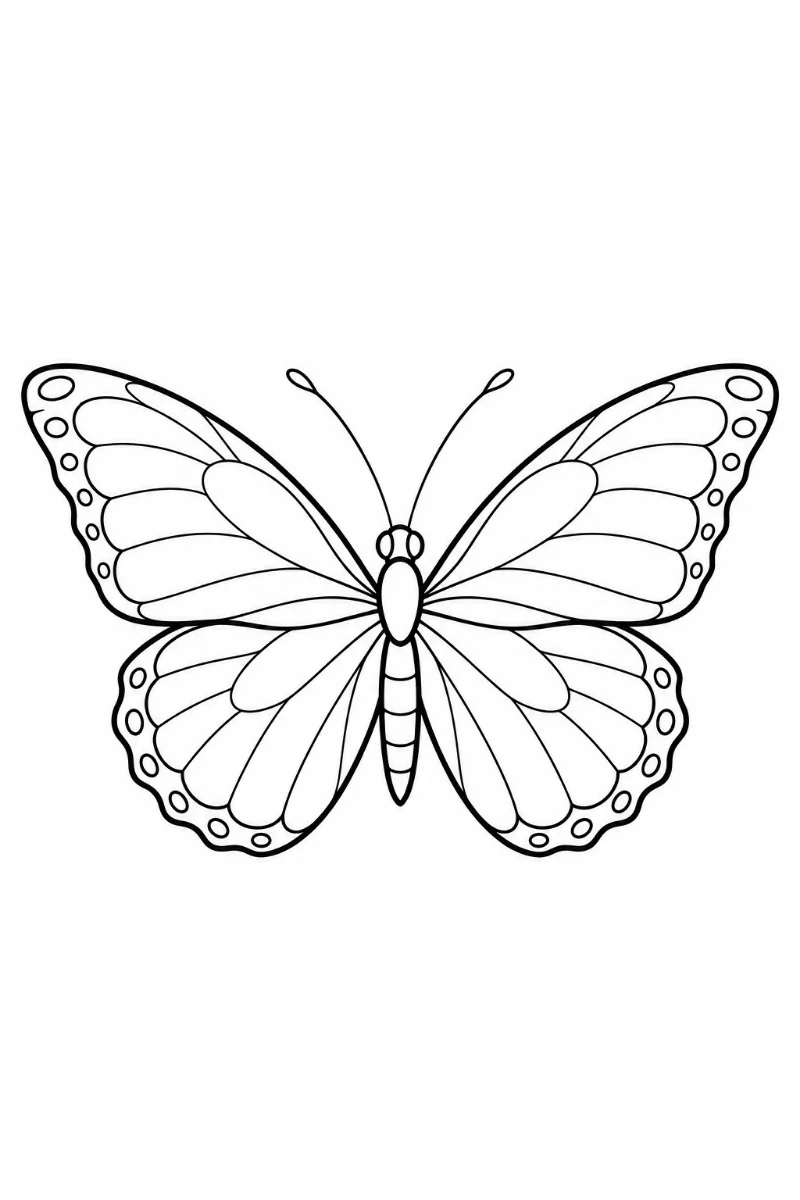
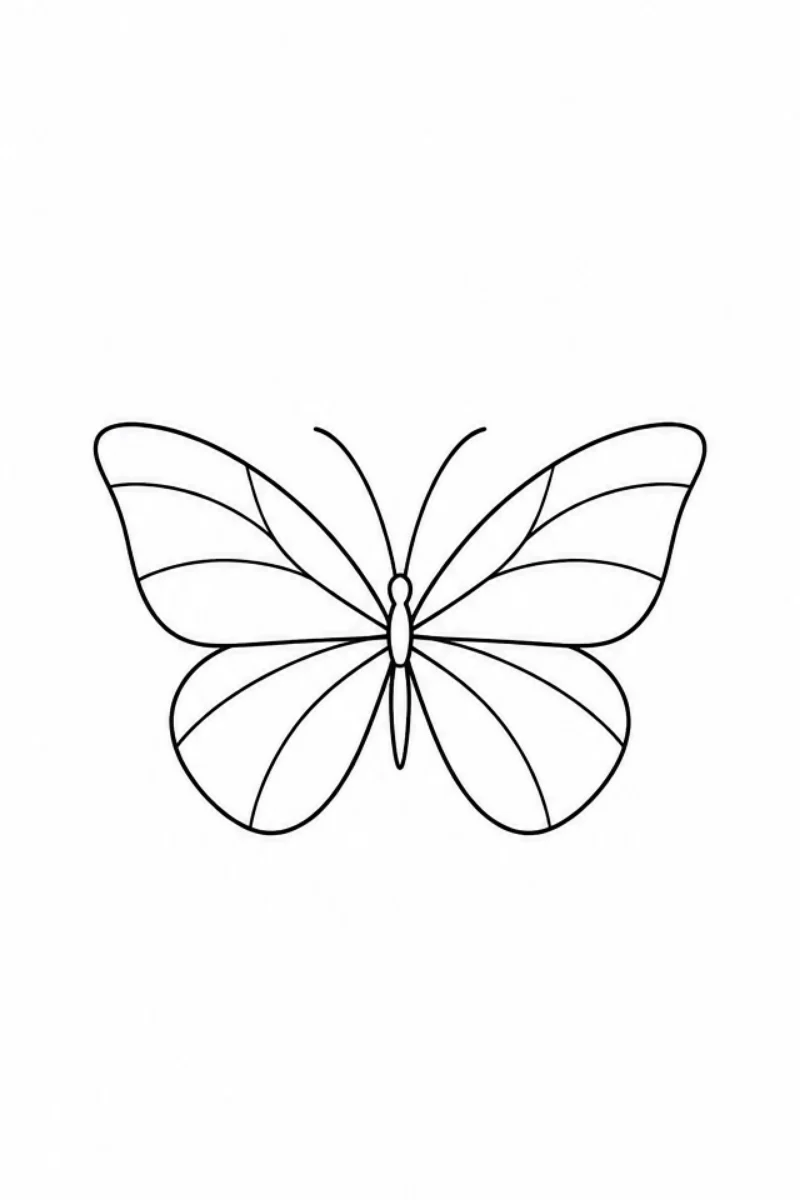
A butterfly stencil lives or dies on symmetry. Clients notice a wing that is slightly wider than its partner long before they notice anything about line quality, and photos of real butterflies are almost never shot square to the lens. The reliable fix is to stencil one clean wing, mirror it, and treat the vein pattern as a lighter layer inside a confident outer edge.
- Free stencils to print
- Line work for thermal or hand transfer
- Prints on A4 or US Letter
What a butterfly tattoo means
Butterflies are read as change and renewal because of the caterpillar to wing life cycle, which is why they turn up so often as recovery, memorial and fresh-start pieces. A monarch carries associations with migration and return. A moth, the night-flying cousin, tends to mean intuition or the darker side of the same idea.
Some clients want a specific species tied to a place or a person. Ask before simplifying the wing pattern, because the pattern is how a monarch, a swallowtail and a blue morpho are told apart.
Popular styles and how the stencil changes
Fine line
Outline plus the main veins, nothing else. Under two inches, drop the spots along the wing margin; they print as dots that close up as the tattoo settles.
American traditional
Thick outline, wings split into two or three solid colour zones, body drawn as a simple segmented oval. The stencil only needs the zone boundaries.
Black and grey realism
Keep the vein map and the edge of each pattern area as a faint guide. The stencil marks where values change, not every scale.
Ornamental
Wings become filigree or lace panels. Build these from a clean symmetrical drawing rather than a photo, since any lens distortion shows up as a lopsided pattern.
Placement and size
- Back of the neck, behind the ear and the ankle suit butterflies at one to two inches with the wings fully open.
- The sternum and upper back take a wide butterfly because the wingspan follows the line of the collarbones or shoulder blades.
- On the forearm or calf, a side view with the wings half closed fits a long, narrow area better than a flat front view.
- Keep the body on the centre line of the placement. If the body sits off axis, the piece reads as crooked even when both wings match.
Line weight tips for a butterfly stencil
- Outer wing edge heaviest, veins one step lighter, margin spots lightest or left out. Three weights is enough.
- Antennae are the thinnest lines on the stencil and the first to break up on thermal paper. If a test print shows them broken, draw them on the skin with a marker instead.
- Where the forewing overlaps the hindwing, let the forewing line run unbroken and stop the hindwing line short of it. Two crossing lines here read as a stray mark.
- Mirror before you print. Convert the cleaner wing, flip it, and check the join at the body so the veins meet at the same point on both sides.
Frequently asked questions
How do I make both wings of a butterfly stencil match?
Convert the better wing, duplicate and mirror it, and join the two halves at the body. Tracing both wings from one photo almost always produces a mismatch, because the camera is rarely square to the insect.
Should a small butterfly stencil include the wing spots?
Usually not below about two inches. Small dots close together blur into one mark on the transfer and on skin. Keep the outline and a few main veins, and add spots with the needle if the design needs them.
Can I use a photo of a real butterfly?
Yes, if it is shot from directly above with the wings open. Angled shots foreshorten one wing, and the converter reproduces that faithfully. Crop out flowers and leaves before converting.
More subjects
Related reading
- Fine Line, Bold and Traditional Stencil Technique by Style - how line weight changes from style to style
- Small Tattoo Ideas - subjects that hold up at an inch or two
- How to Size and Print a Tattoo Stencil - getting the wingspan right for the placement
Make your own butterfly stencil
Shoot the reference from above, mirror the cleaner wing, and adjust vein weight before export. Stencify turns a photo, sketch or text prompt into clean line work in about 30 seconds on iPhone, iPad or Android. Two free uses, then $4.99 a week or $47.99 a year.