Stencil library
Anubis tattoo stencil
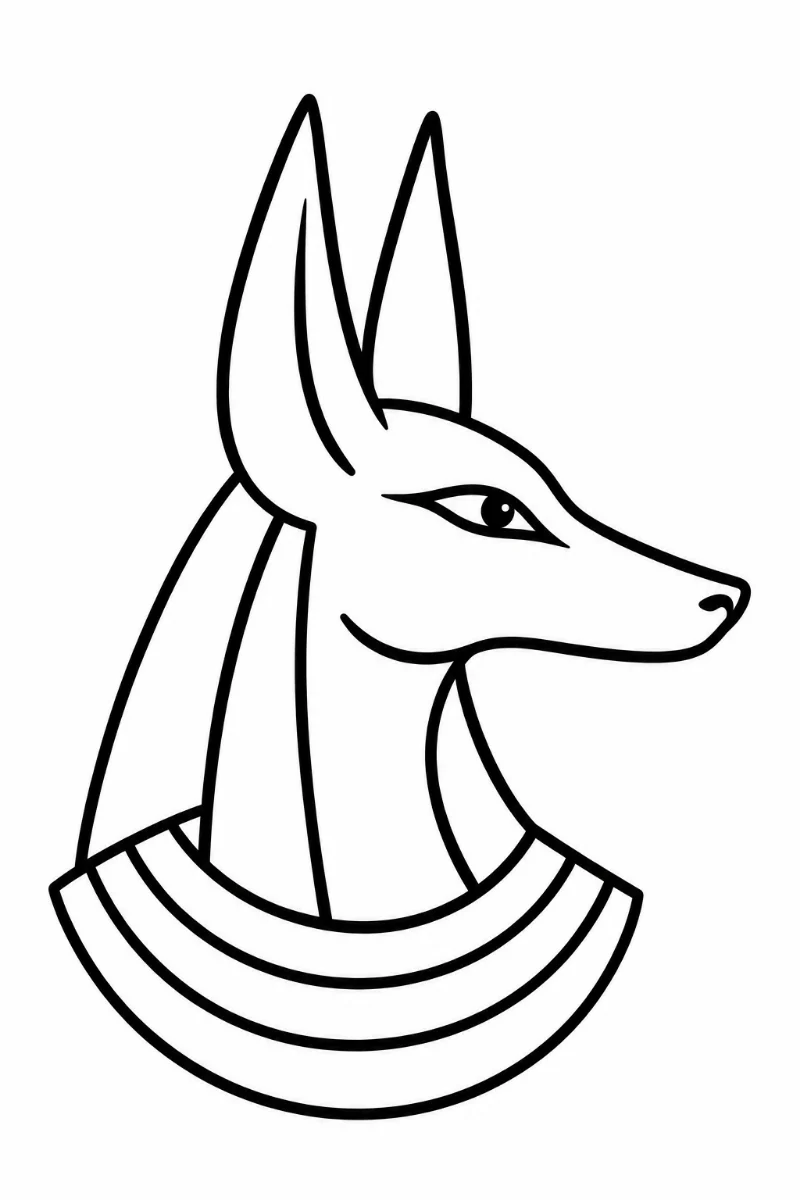
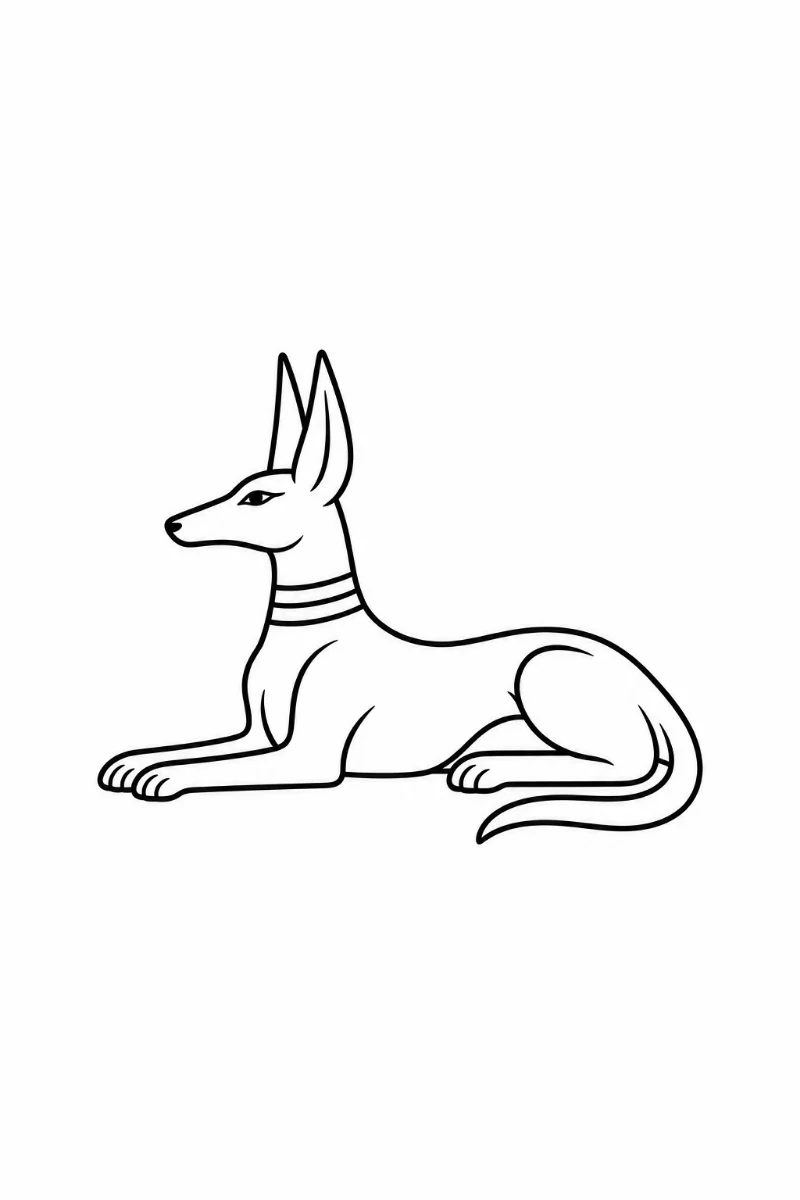
Anubis is one of the most recognisable figures from ancient Egyptian religion: a man with the head of a jackal or other wild dog, or the animal itself lying on a shrine. For the stencil, the tall pointed ears, the long snout and the broad collar carry the identity. Get those three clean and the piece reads instantly, even at a distance.
- Sample stencils, Stencify style
- Line work for thermal or hand transfer
- Prints on A4 or US Letter
- Updated Oct 19, 2026
What an Anubis tattoo means
In Egyptian belief Anubis was a god of embalming and the protector of cemeteries and the dead. He is shown preparing bodies for burial and, in funerary texts, guiding the dead and overseeing the weighing of the heart against the feather of Ma'at. His black colouring is often linked to the fertile soil of the Nile and to rebirth rather than to death itself. People wear Anubis for protection, as a guide through loss, or out of interest in Egyptian history.
If a client wants hieroglyphs in the piece, copy them from a reliable source. Invented glyphs are obvious to anyone who reads them.
Popular Anubis tattoo styles
Egyptian profile style
Flat, outline-led work drawn in the conventions of tomb painting: head in profile, shoulders facing front, bold even lines. Translates directly to a stencil with very little cleanup.
Black and grey realism
A sculpted or statue-like head with heavy contrast. The stencil should map the value edges, not trace every highlight.
Ornamental and blackwork
Anubis framed with geometry, a sun disc or lotus forms, and large solid black areas. Mark the edges of the black areas clearly so nothing gets packed by mistake.
Placement and size
- Outer forearm and calf suit a profile head at five to seven inches, with the ears running along the length of the limb.
- A standing figure with sceptre needs height, so the back, the side of the ribs or a full calf works better than a forearm.
- The jackal form on a shrine is wide and low, which fits across the upper back or the chest.
- Keep the snout and ear tips away from the elbow and knee creases, where fine points blur first.
Line weight tips for an Anubis stencil
- The ear and snout points need the same care as star points: sharp, closed, no rounding. Lower line weight if the tips fill in.
- Broad collars are made of repeating bands. Keep the band lines evenly spaced and at one weight, and leave out the tiny inlay details unless the piece is large.
- On realism references, raise contrast until the stone or skin texture drops out and only the major planes of the face remain.
- Statue photos often have harsh museum lighting. Pick a reference lit from one side so the jaw and eye socket keep their edges.
- Check the eye. It is the smallest feature and the one that sets the character, so make sure it survives at print size.
Frequently asked questions
Is Anubis a jackal or a dog?
He is usually described as jackal-headed. Some researchers suggest the animal may be a wild canine such as the African golden wolf, but the jackal is the common shorthand.
Can I add hieroglyphs to an Anubis stencil?
Yes, but copy them from a trustworthy source and check the reading direction. Keep each glyph large enough that its interior shapes stay open.
What size should an Anubis tattoo be?
A head in profile works from about four inches. A full standing figure with collar detail and sceptre usually needs eight inches or more.
More subjects
Related reading
- How to Make a Realism Tattoo Stencil - mapping values without over-lining
- Stencils From Complex References - reducing busy photos to line work
- Tattoo Placement and Anatomy - why stencils must follow the body
Make your own Anubis stencil
Convert a museum photo, a drawing or a text description into Anubis line work, then refine the ears and collar with line weight and contrast. Stencify turns a photo, sketch or text into print-ready line work in about 30 seconds on iPhone, iPad or Android. Two free uses, then $4.99 a week or $47.99 a year (US).