Stencil library
Flower tattoo stencil
Flowers are one of the most common requests in any studio, from a single stem on a wrist to a bouquet across a forearm. They are also where photo references cause the most trouble: a bloom is made of overlapping petals, and every overlap is a decision about which line stays. This page covers the main flower styles, what each one asks of the stencil, and how to keep petals readable at small sizes.
- Free stencils to print
- Line work for thermal or hand transfer
- Prints on A4 or US Letter
What a flower tattoo means
The meaning depends on the flower. A rose is love and, with thorns, love that costs something. The lotus stands for growth out of difficulty, the peony for wealth and good fortune in Japanese work, and the cherry blossom for the short life of beautiful things. Sunflowers read as warmth and loyalty, lilies as remembrance, and birth flowers mark a month or a person.
Many clients do not want a specific meaning at all. They want a shape that flows with the body, and a flower does that better than almost any other subject because it can be stretched, leaned and wrapped without looking wrong.
Popular styles and how the stencil changes
Fine line botanical
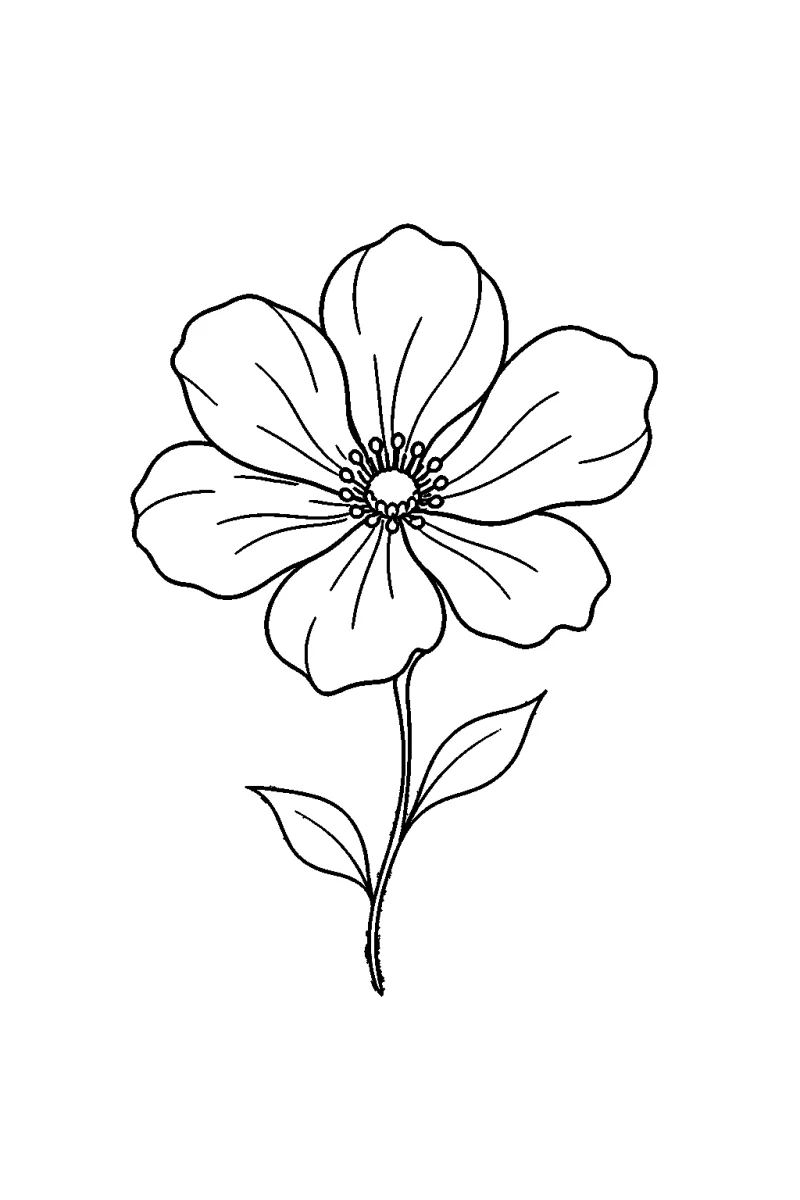
One weight, no fill, usually a single stem with a bloom, a bud and a leaf or two. The stencil is almost the whole tattoo, so every line has to be deliberate. Keep the petal edges and one fold per petal; drop everything else.
American traditional
Bold outline, a small number of large petals and a solid centre. Petals are simplified to clean curves that meet at clear points. The stencil carries the outline and the few interior lines that separate the petal layers; colour and shading do the rest.
Japanese peony and chrysanthemum
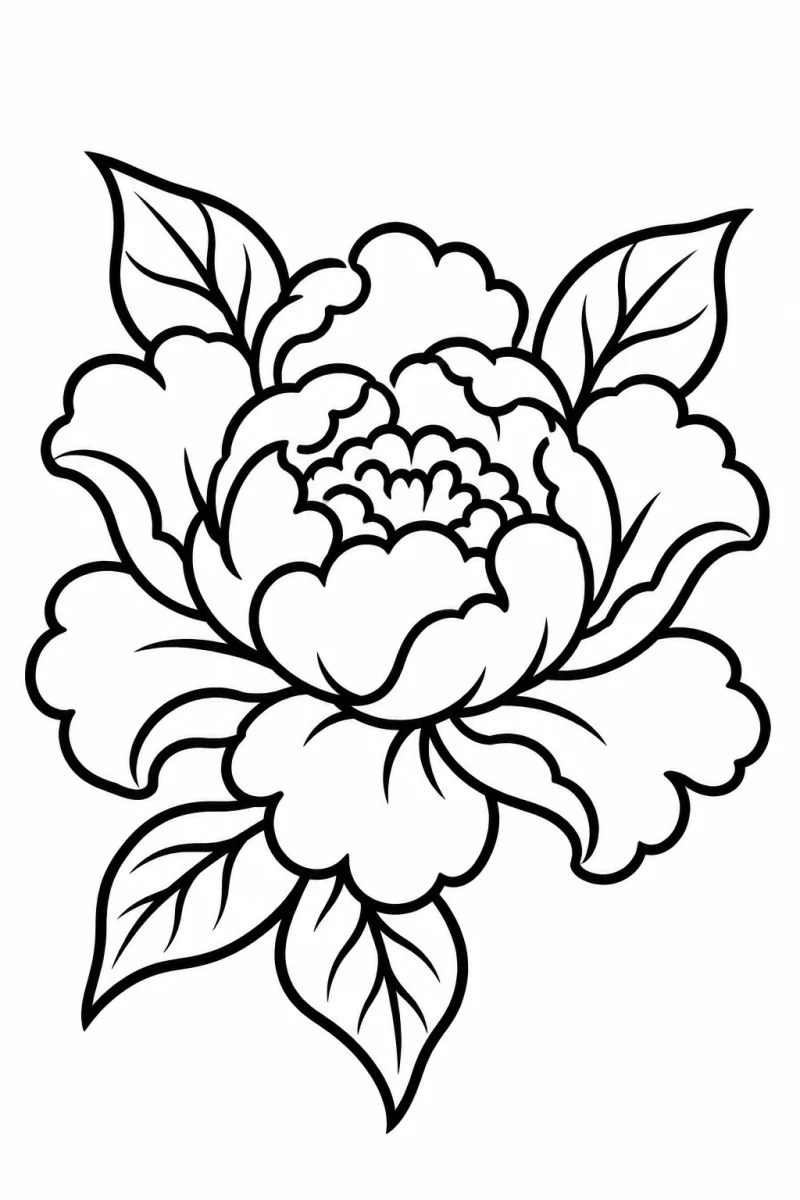
Dense, layered petals that build outward from the centre. Draw the petal layers as separate rings and break each petal line where the one in front overlaps it. Chrysanthemums have many narrow petals, so keep the count sane: the eye reads fullness from a dozen well-placed petals, not from fifty.
Blackwork and ornamental
Flowers mirrored into symmetrical patterns, often with dotwork or filled petals. The stencil needs crisp outlines for every filled area and a visible centre line so the mirrored halves land straight on the body. Our mandala stencil guide covers the symmetry side in more depth.
Bouquets and wraps
Several blooms with leaves and stems along a limb. Decide the front-to-back order of the flowers before you convert, then make sure every stem reads as going behind or in front of the next bloom. A bouquet stencil that leaves this open becomes a tangle on skin.
Placement and size
- Wrist, ankle, collarbone and behind the ear take a single small bloom or a stem under two inches, outline only.
- The inner forearm suits a vertical stem with one or two blooms at four to seven inches, following the length of the arm.
- Shoulder, hip and thigh suit larger peonies and bouquets that wrap around the curve. Check the wrap on a try-on so the main bloom does not land on the side where the body folds.
- The sternum takes symmetrical ornamental flowers. Mark the centre line on the stencil and on the skin.
- Ribs and the side of the torso suit long, leaning stems. Lean the stem on the design, not by rotating the print at the last moment.
Line weight tips for a flower stencil
- Settle the petal order first. Where two petals overlap, the petal in front keeps its full edge and the one behind loses its line at the overlap. Doing this consistently is most of what makes a flower stencil clean.
- Keep the outer edge of the bloom slightly heavier than the inner petal lines. It separates the flower from leaves and background elements once the colour goes in.
- From a photo, keep the folds and drop the texture. Petal veins and soft gradients turn into broken grey lines on a stencil; raise the contrast until only edges and the deepest folds remain, as described in our line art from photo guide.
- Leaves need a midrib and an outline, nothing more. Side veins are a shading decision, not a stencil decision.
- Stems should be two lines, not one, at any size over an inch. A single stem line disappears under the first pass of ink.
Frequently asked questions
Which flower is easiest to stencil?
A single open bloom with five or six broad petals, such as a daisy, a cherry blossom or a simple wild rose. Petals that do not overlap much give the stencil fewer places to go wrong.
How do I make a flower stencil from a photo?
Pick a photo with one clear bloom and even light, crop to the flower, and convert it to line work. Then keep only the petal edges and the main folds, and remove the texture lines a photo adds inside each petal.
How do I stop petals blurring together on a small flower stencil?
Reduce the petal count, drop the inner fold lines and keep one weight. Below about an inch and a half, a flower stencil works as an outline with a small centre and nothing else.
More subjects
Related reading
- Birth Flower Tattoos - one flower for each month and how each one stencils
- Small Tattoo Ideas - designs that hold up at small sizes
- Line Art From a Photo - turning a reference photo into clean lines
Make your own flower stencil
Start from the client's photo or a sketch, keep the petal edges and folds, and print at the exact size for the placement. Stencify turns a photo, sketch or text prompt into clean line work in about 30 seconds on iPhone, iPad or Android. Two free uses, then $4.99 a week or $47.99 a year.